
Who does what on a film set, and how this affects your quote
On a film shoot, the roles of director, cinematographer, lighting technician, sound engineer and editor may all be carried out by a single person, or by as many as five. As we charge 50 CHF per person present for every hour of filming, the number of staff members has a greater impact on the quote than the equipment does.
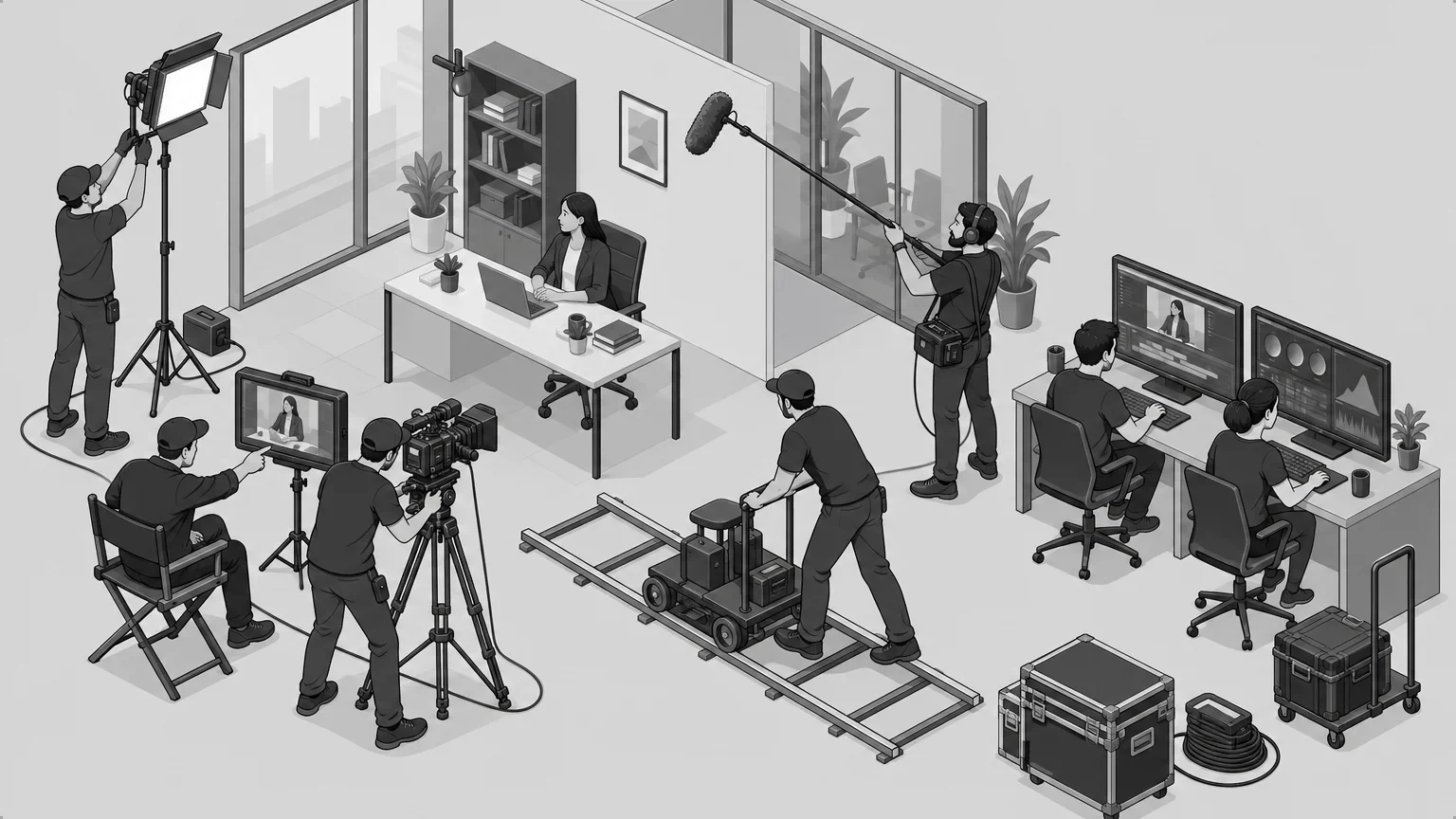
A film production budget is read item by item, and behind each line item for personnel lies a specific role, whether it involves deciding on shots, setting up the lighting or monitoring the sound. On a small production, a single person may take on several of these roles.
Once you know who is responsible for what, you can compare two quotes on the same basis and decide where to allocate the budget.
The production team makes the decisions
The director chooses the shots, directs the people being filmed – whether they are actors or crew members – and makes decisions on artistic matters. On a corporate film, they are also the one who prepares the shoot with you, from the storyboard to the sequence of shots and the choice of locations.
Responsibility for the image is shared between the director of photography and the camera operator
The director of photography works with the director to create the visual style. They choose the camera, lenses and lighting, set the exposure for each set, and then oversee the colour grading once filming has finished. They are also known as a chief cameraman, and when a distinction is made between the two titles, it is the chief cameraman who also operates the camera.
The camera operator frames and tracks the shot. According to the CPNEF audiovisual job description, they work under the technical supervision of the director of photography, whilst the artistic aspect is the responsibility of the director. They also monitor the frame and, at the end of the take, point out any microphones, reflections or camera stands that have entered the shot.
The chief lighting technician handles the lighting, whilst the chief camera operator operates the camera
The chief electrician sets up the lighting designed by the director of photography, with whom he draws up the lighting plan and the list of lights. The chief rigger is responsible for the equipment that supports and moves the camera, from dolly tracks to cranes. On a small-scale shoot, with an LED kit and a slider, the director of photography often sets everything up himself.
Sound requires a full-time listener
The sound engineer positions the microphones, including the wireless microphones worn by the people being filmed, listens to each track during the take and corrects any unwanted noise as soon as it occurs, before delivering the direct sound and ambient sound to the editing team.
A camera operator cannot listen through headphones throughout the entire take. For an interview, a panel discussion or a testimonial, a dedicated sound operator ensures the speech is captured clearly, as this is difficult to rectify in post-production.
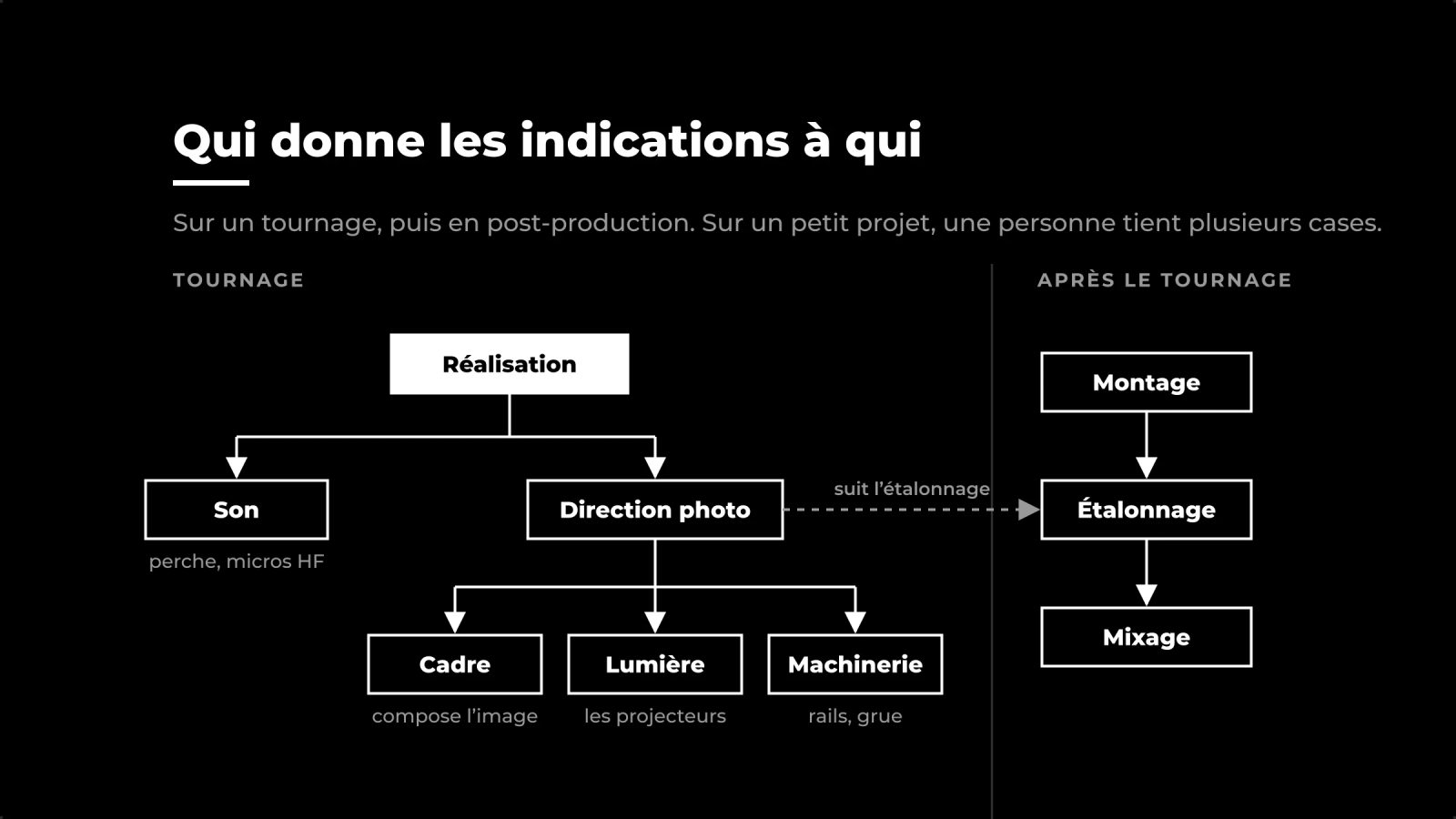
Editing, colour grading and sound mixing, after filming
The editor puts the shots together and builds the narrative, then the colourist adjusts the colours shot by shot, often in collaboration with the director of photography, before the sound mix, which balances the dialogue, music and ambient sounds. On a short film, one person often takes on all three roles, and our rate structure charges by the hour for editing, whilst colour grading and sound mixing are charged at a flat rate.
How much each post costs us
Materials and labour are still listed separately on our quotations.
| Direction, cinematography, framing, sound, lighting | 50 CHF per hour, per person |
| 8-hour filming day, per person | 400 CHF |
| Editing | 50 CHF per hour |
| Calibration | 400 CHF |
| Audio mixing | 300 CHF |
| Camera (hire) | 300 CHF per day |
| LED lighting kit | 250 CHF per day |
What’s changing in your quote
Excluding equipment, an eight-hour day costs CHF 400 in staff costs for one person, CHF 800 for two and CHF 2,000 for five. Each additional person frees someone else from a task, so a carefully lit interview justifies a second person on camera or sound, whilst a wide-angle shot can be handled by one person.
To compare two quotes, ask each service provider who will be performing which role on the day of filming.
Preparing for your shoot
Please send us the project details, the dates and the roles already filled within your team. We will then fill in the gaps for production, cinematography, framing or colour grading, and provide a quote for each role.
Sources
Job profiles from the National Joint Committee for Employment and Training in the Audiovisual Sector (France), accessed in October 2026. The rates are those set out in our pay scale.
News
Also worth reading
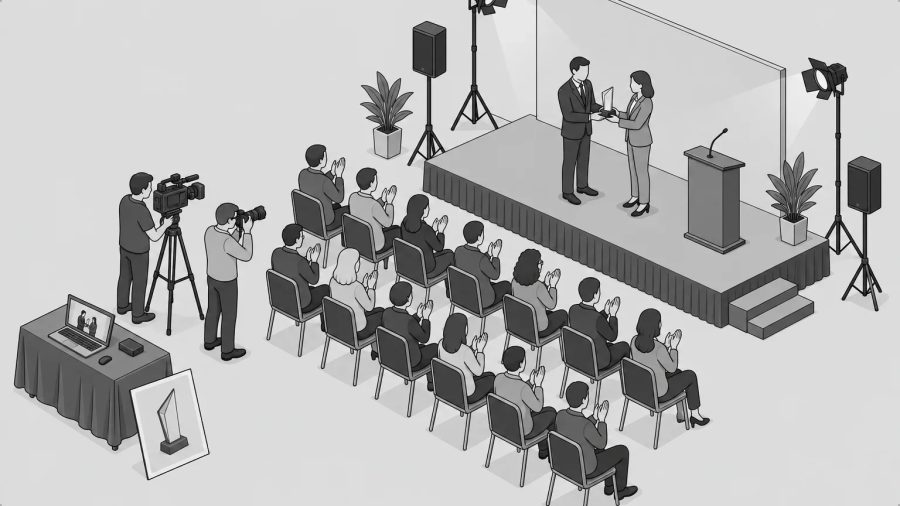
Photo et vidéo le même jour : ce qu’on tire d’une vidéo 4K, et quand il faut un photographe
A still image taken from a 4K video is 8.3 megapixels, which is sufficient for social media and for a print measuring approximately 32 × 18 cm. A poster or a quick gesture requires a photographer, so at an event we arrange for both to be present, each with their own settings.
Read more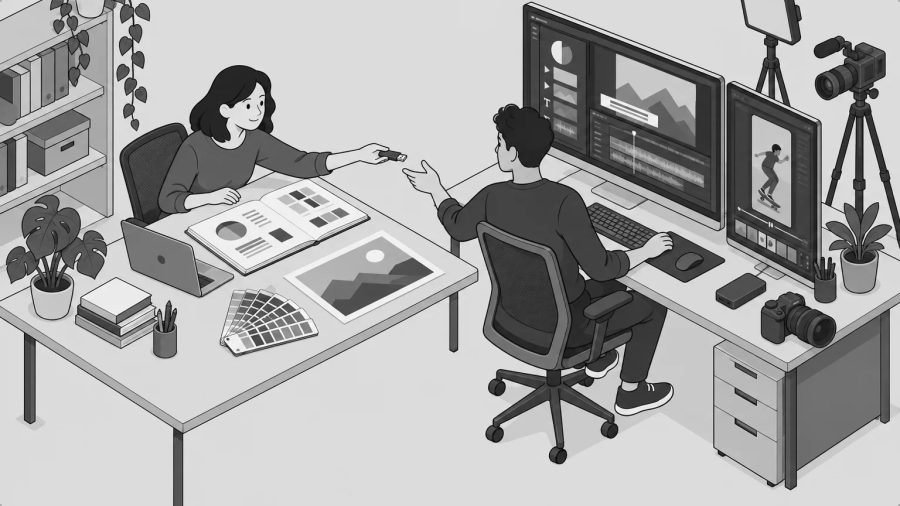
Votre charte graphique passe en vidéo : ce que votre graphiste doit vous livrer
A style guide designed for print often arrives on set as a PDF, complete with Pantone references and a font licence for print. Video branding requires more: from a vector logo split into layers with colours approved on screen, to a licence covering the video and a few animation guidelines.
Read more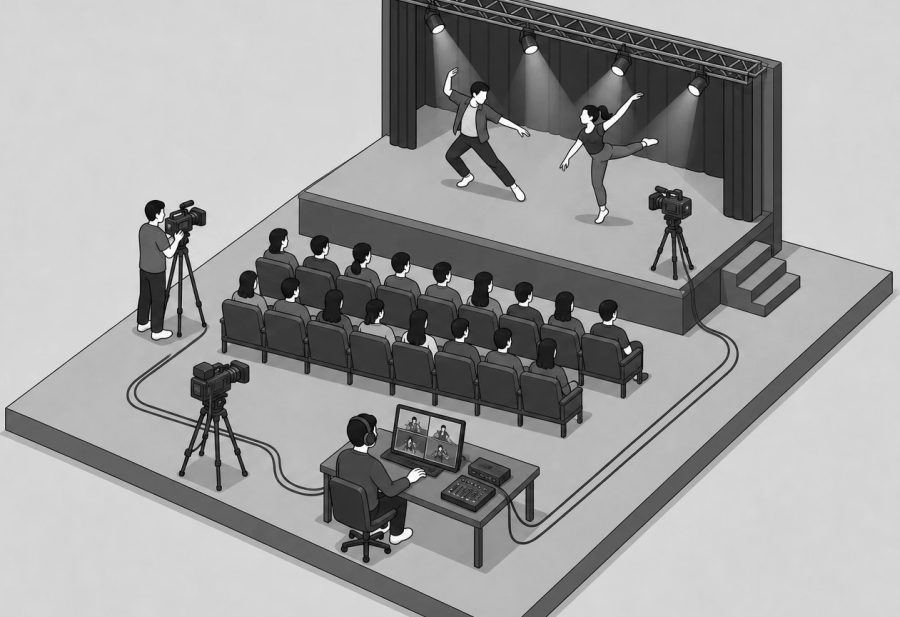
Captation de spectacle : quel dispositif pour quel budget
With us, filming a performance costs between 700 and 1,400 CHF per performance. The intended use of the footage determines the price: for archival purposes, a wide shot is sufficient, whereas a film intended for broadcast requires multiple camera angles and editing.
Read more